

Build raises USD $8.5 million to automate infrastructure
Tue, 30th Jun 2026
Build has raised USD $8.5 million in seed funding led by Index Ventures, backing its use of artificial intelligence to handle early-stage infrastructure development work.
Pebblebed, Puzzle Ventures and Tiny.vc joined the round, alongside angel investors including OpenAI Chief Financial Officer Sarah Friar, Blackstone Chief Technology Officer John Stecher, and senior figures from OpenAI, Meta AI Research and Google Maps.
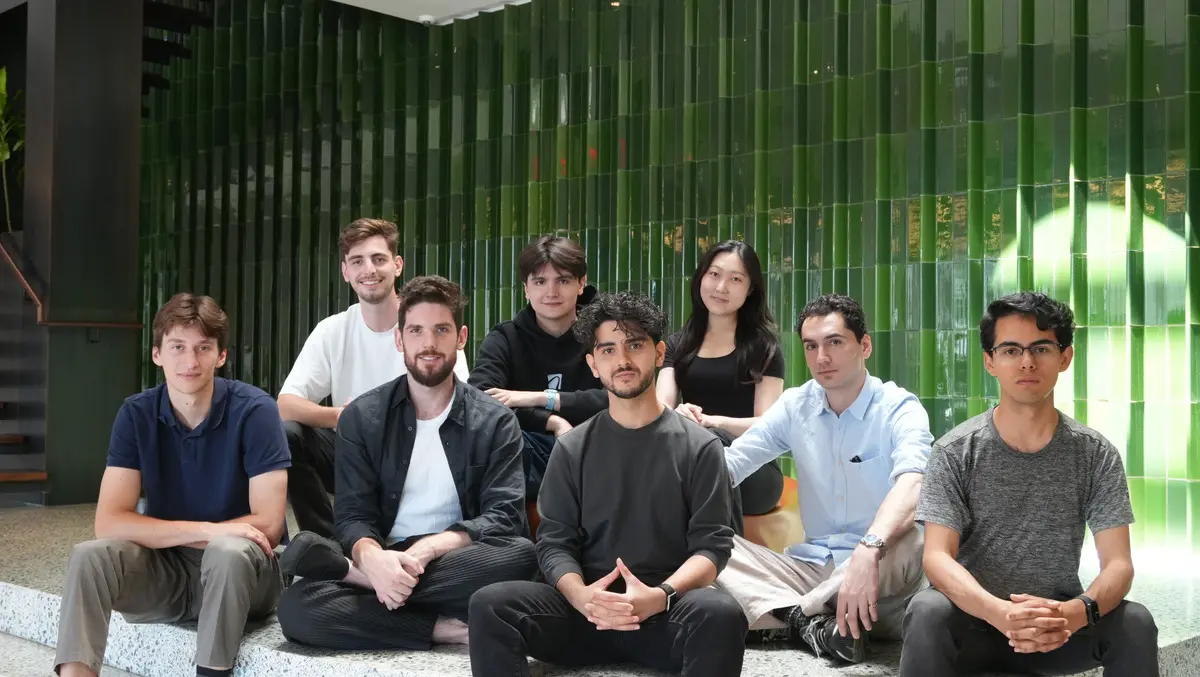
The New York-based company was founded by architect James Stirrat-Ellis and AI researcher Ben McClusky. It focuses on work that often falls between site identification and early design, including site sourcing, power assessment, technical due diligence and design preparation.
Its systems can cut due diligence timelines by more than 95%, reducing work that would usually take weeks to hours. The platform draws on information from more than 1,600 data sources.
According to Build, the product has already been used on more than 100 projects across 15 countries. Its customers include governments, Fortune 500 companies and institutional real estate groups such as Tishman Speyer.
Founders' background
Stirrat-Ellis previously worked at Heatherwick Studio and was involved in projects including Changi Airport T5 in Singapore. McClusky has a background in multi-agent systems and reinforcement learning research.
Build combines AI specialists with domain experts from groups including Blackstone, Tishman Speyer, Starwood Capital and JPMorgan, as well as specialists in data centre development and infrastructure delivery. Customer work is reviewed by human operators before being sent on.
Build is entering a market where developers, investors and public authorities are under pressure to bring forward power, industrial and digital infrastructure more quickly. It argues that infrastructure planning is still slowed by fragmented processes, multiple consultants, and sequential reviews of planning, environmental and grid constraints.
Its approach differs from software vendors that sell tools for internal teams. Instead, Build sells completed development work generated through AI systems and checked by experienced staff.
Investment case
Index Ventures is backing the business as investors look for AI companies tied to sectors beyond office software and coding tools. Infrastructure and real estate have drawn attention because of the volume of manual analysis involved in project assessment and permitting.
Build will use the new funding to expand its engineering and infrastructure teams, speed up research and development, and increase its presence in North America and Europe. Its longer-term aim is to automate more of the development lifecycle, including permitting, engineering, pre-construction and asset management.
That ambition comes as demand for data centres, electricity supply and industrial capacity rises across several markets. Developers are under pressure to identify viable sites quickly while navigating power availability, planning restrictions, environmental issues and political considerations.
Stirrat-Ellis said the company was founded to address bottlenecks in the physical development process. "The industries shaping the physical world have spent decades trapped in process instead of creativity. By removing that operational burden, we can help teams move faster, make better decisions and deliver better infrastructure. That's the long-term opportunity and we're only at the beginning of it," he said.
Martin Mignot, Partner at Index Ventures, outlined the firm's view of the company. "Build represents a new generation of AI companies focused on delivering actual work rather than simply improving software workflows. James and Ben have combined deep technical capability with real operational understanding of how critical infrastructure gets built. The infrastructure challenge is global and what the team has achieved before launch is extraordinary," Mignot said.
Another backer pointed to the scale of the sector being targeted. "What stood out immediately about Build was the ambition of the vision and the speed of execution. James and Ben understood early that AI was about to move beyond software and begin transforming how real-world work gets done. Infrastructure remains one of the largest untapped opportunities for AI and Build is creating a completely new model for how critical projects are delivered," Cai said.